Skip to content

Solutions

AI Factories

Repeatable production lines for building, testing and shipping intelligence.

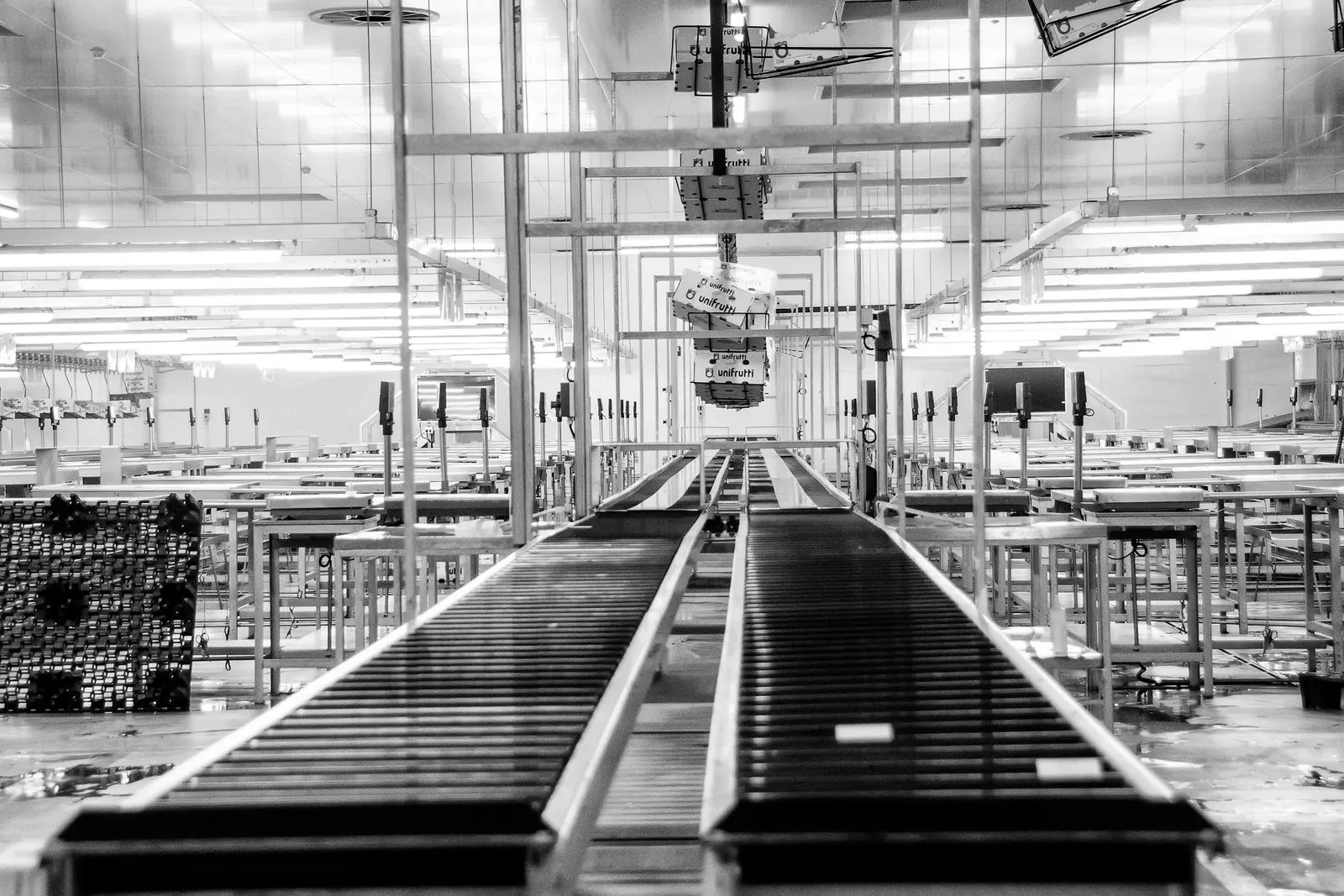
An AI factory is compute, data, tooling and process working as one line, so that ideas become deployed models and agents on a predictable schedule.

The same path from idea to production every time
Repeatable
The same path from idea to production every time
Evaluation and approval built into the line
Governed
Evaluation and approval built into the line
Compute sized to real workloads and budgets
Right-sized capacity
Compute sized to real workloads and budgets
A team and practice that keep output steady
Operated by you
A team and practice that keep output steady

01Overview

What we do

Many organizations ship one AI project a year, by heroic effort. The second one starts from scratch. An AI factory changes that. It is the combination of compute, data access, build and evaluation tooling, release controls and a team, so that the tenth model or agent takes far less effort than the first and meets the same standards.

We design and stand up the factory around your goals. For a bank it may be a line of credit and fraud models and service agents. For a ministry it may be a shared capability that agencies use under common rules. For a sovereign programme it may be national compute with a catalogue of models and a way to share them safely. We start with the work the factory must produce, then size the infrastructure and the operating model to match.

The hard parts are rarely the GPUs. They are data access that is both fast and governed, evaluation that people trust, a release process that does not need a committee every time and a team that knows who owns what. We build those with you, and we build in the controls that production demands: approvals, audit, cost tracking and rollback.


02

A line, not a project

A factory has stages. Ideas come in and are triaged. Data is prepared and checked. Models and agents are built, then tested against agreed measures. Approved releases are deployed, monitored and improved. Each stage has an owner, a standard and a record.

That structure lets a small team handle a growing number of products without losing quality. It also lets leaders see what is in the pipeline, what it costs and what it has delivered.

  • Intake, build, evaluate, release and operate
  • An owner and a standard at each stage
  • A portfolio view of work, cost and results

03What you get

Capabilities

Compute and infrastructure

We plan capacity for training, fine-tuning and inference based on your real workloads, not on peak benchmarks. Options include public cloud, private clusters and in-country partner capacity. We compare cost, availability, latency and residency, and design for scheduling and sharing so expensive hardware does not sit idle.

  • Capacity plans from workload analysis
  • Cloud, private and partner options compared
  • Scheduling and quota management

Idle accelerators are the most expensive kind.

Data and feature pipelines

We build the pipelines that deliver governed data to builders: access requests, de-identification where needed, versioned datasets and feature stores. Lineage shows which data trained which model. Sensitive data stays in controlled zones.

  • Versioned datasets and features
  • Access requests and de-identification
  • Lineage from data to model

Fast, governed data access is the true bottleneck.

Model and agent pipelines

We set up build, test and release pipelines for models and agents: experiment tracking, reproducible builds, automatic evaluation, staged rollout and rollback. Agents are tested with scenarios and adversarial inputs before they reach users. Each release carries its test results.

  • Experiment tracking and reproducible builds
  • Automated evaluation suites
  • Staged rollout and rollback

Speed without tests is a faster way to fail.

Evaluation and safety

We build evaluation sets with your domain experts and run them on every release. Tests cover accuracy, robustness, bias, privacy leakage, cost and latency. Results feed an approval gate that names who can release and under what conditions.

  • Domain-expert evaluation sets
  • Bias, robustness and privacy tests
  • Approval gates with named approvers

Trust in the output comes from trust in the tests.

Factory operations

We define the roles, rituals and metrics that keep output steady: intake and prioritisation, on-call, incident review, cost review and a regular retirement of unused models. Dashboards show throughput, quality, cost per release and utilisation.

  • Roles, rituals and service levels
  • Throughput, quality and cost dashboards
  • Retirement of unused assets

Steady output is an operating discipline.

Sovereign and shared factories

For governments and consortia we design shared factories where several agencies or companies use common compute and tooling under separate policies. We design tenancy, cost sharing, model catalogues and rules for data use. Legal and policy design is led by your counsel and policy teams.

  • Multi-tenant compute and tooling
  • Model catalogue and sharing rules
  • Cost allocation across members

Shared capacity lowers the cost of entry.

See how this applies to your organization.

Free 30 minutes with an engineer.

04African sectors

Where it applies

01

Situation

A group wants dozens of models and agents for credit, fraud, claims and service but has no repeatable way to ship them under model risk rules.

02

What it does

We stand up a factory with evaluation gates, documentation and audit that matches model risk practice, so each release carries its evidence.

03

Human decides

The model risk committee sets standards and approves high-impact releases.

06

What we do and do not do

Does

  • Design the factory, its stages, roles and standards
  • Plan and set up infrastructure with you
  • Build pipelines for data, models and agents
  • Set up evaluation and approval gates
  • Train and support the factory team

Does not

  • Sell hardware or promise specific chips
  • Release a model without evaluation
  • Build a factory before there is work for it
  • Own your models or data
  • Operate the factory for you indefinitely

07FAQ

Questions we hear

  • Not always. We compare cloud, partner and owned capacity against your real workloads. Many organizations start with rented capacity and move parts of the workload as demand becomes steady.

Experience you can lean on

Our team of consultants and experts brings a combined 35 years of industry experience.

Immersed in technology and across many different verticals, so the people on your project have done this before.

AI Factories

Ready for AI Factories?

Tell us the problem. An engineer, not a salesperson, answers.

  • Free 30 minute briefing
  • Embedded engineers, working on your real systems
Build your AI factory

Ready for AI Factories?

Repeatable production lines for building, testing and shipping intelligence.