Skip to content

Boltcliq product / Observability and logging for decisions

/ Observation Plane

Cyclopes

See, explain and improve what your organization and its agents actually do. Cyclopes is observability and logging for modern decision making, covering business and AI observability, reported in business terms.

telemetry on open standards, starting with OpenTelemetry
Open
telemetry on open standards, starting with OpenTelemetry
recorded with its inputs, rule or model, outcome and approver
Every decision
recorded with its inputs, rule or model, outcome and approver
alerts tied to ontology objects, such as 'Lagos branch approvals slowed'
Business terms
alerts tied to ontology objects, such as 'Lagos branch approvals slowed'
never blocks an action; Odin and Monolith do that
Observes only
never blocks an action; Odin and Monolith do that

When someone asks what happened and why, the answer should already be on record.

01Observation plane

Overview

Traditional monitoring tells you that a server is slow. It does not tell you that loan approvals at one branch have slowed, or that a support agent gave a customer the wrong refund policy. Business teams look at one set of dashboards, engineers look at another, and neither can explain a single consequential decision from start to finish.

AI makes the gap wider. A model call has a prompt, retrieved documents, tool calls, an answer, a latency and a cost. A good answer and a bad one can look identical in a standard log. If an agent acts, someone will eventually ask what it saw, what it chose and why. Without a record that was designed for the question, the only answer is a shrug.

Cyclopes is built for that question. Applications, workflows and agents emit logs, metrics, traces and decision events to one append-only stream. Technical telemetry is tied to Zeus objects, so an alert reads in business terms. Every consequential decision, by a person or by an AI, is stored with its inputs, the rule or model used, the outcome and the approver. Cyclopes observes and never decides. Blocking an action is the job of Odin and Monolith.


02

Cyclopes in one picture

See, explain and improve what your organization and its agents actually do. Cyclopes is observability and logging for modern decision making, covering business and AI observability, reported in business terms.

  • A decision record for every consequential action, by a person or an agent.
  • Traces of what agents read, called and answered, with cost per task.
  • Audit views and exports that an examiner or oversight body can read.
cyclopes
Schematic of Cyclopes. Illustrative, not a product screenshot.

03In five steps

How it works

  1. cyclopes

    Collect from everywhere

    Applications, workflows and agents send logs, metrics, traces and decision events to one stream using open standards. Existing tools can keep running beside it. The stream is append-only, so a record cannot be quietly changed afterwards.

    Every approval emits a decision record.

  2. cyclopes

    Make agents inspectable

    For each agent task Cyclopes keeps the prompt, the documents retrieved, the tools called, the output, the latency and the cost. You can open one task and see exactly what happened. Quality evaluations and drift checks run over the same data.

    Which documents did the agent read before it answered?

  3. zeus

    Tie it to the business

    KPIs are bound to Zeus objects, so a technical signal becomes a business statement. Alerts name the branch, the product line or the trade lane, not a host name. They can start a workflow in Zeus so the right person acts.

    Loan approvals at the Kano branch slowed this week.

  4. human

    Prove it

    Audit views show who or what did what, when and under which rule. Retention policies decide how long records are kept. Exports are designed to be regulator-ready, with formats agreed with the regulator in scope.

    All credit decisions at one branch for a quarter, with approvers.

  5. human

    Replay and improve

    Before you change an agent, test the new version on real past cases and compare the results with what happened. You see where it is better and where it regresses. Only then is it promoted.

    Run last month's 500 cases through v1.3 and compare.

04What Cyclopes does

Capabilities

Telemetry

Logs, metrics and traces from applications, workflows and agents, collected on open standards such as OpenTelemetry. Cyclopes can receive from existing monitoring tools as well as from Boltcliq products. A common format means you are not locked in.

  • OTLP ingestion
  • Logs, metrics and traces
  • Works beside existing monitoring

You should not have to rebuild your monitoring to start seeing decisions.

AI observability

Prompts, retrieved context, tool calls, outputs, latency and cost per task, with quality evaluations and drift detection. You can follow one answer back to the documents behind it. Cost can be attributed per team, agent and task.

  • Prompt, retrieval and tool-call traces
  • Cost and latency per task
  • Quality evaluation and drift

An agent that is quietly getting worse, or quietly getting expensive, is a risk nobody sees.

Decision records

A structured record for each consequential decision: the inputs, the rule or model that was used, the outcome and the approver. The same format covers a credit officer, an automated rule and an agent. A record can be opened later and read without special knowledge.

  • Inputs, rule or model, outcome, approver
  • One format for people and agents
  • Linked to Zeus objects

When a decision is questioned, the record is the evidence.

Business observability

KPIs tied to ontology objects, so alerts speak the language of the business. A slowdown is reported against a branch, a depot or a district, with the supporting traces one click away. Operational teams and engineers can look at the same incident.

  • KPIs bound to Zeus objects
  • Alerts in business language
  • Link from KPI to underlying traces

Business people do not read host metrics. They read branches, shipments and customers.

Audit and compliance

Immutable audit views, retention policies and exports for regulators and oversight bodies. Access to logs is controlled by Odin, since logs often hold sensitive content. Formats for exports are confirmed with design partners and the regulator in scope.

  • Append-only audit views
  • Configurable retention and erasure
  • Regulator-ready export (design goal)

Regulators ask for evidence, not for assurances.

Evaluation and replay

Run a new agent version, prompt or policy against past cases before it goes live. Compare outcomes, cost and errors with what actually happened. Evaluation sets can be built from real decision records.

  • Replay past cases
  • Compare versions side by side
  • Evaluation sets from real records

It is cheaper to find a regression on last month than on a customer.

Alerting and incident workflow

Alerts on thresholds, anomalies and quality drops. An alert can start a workflow in Zeus, so a named person is asked to act and the response is itself recorded. Cyclopes never blocks the underlying action. It raises the issue and keeps the evidence.

  • Threshold and anomaly alerts
  • Workflow routing through Zeus
  • Response recorded with the alert

An alert nobody owns is noise.

Telemetry storage at scale

Log volume will exceed what a transactional database should carry. This is a design intention that will be confirmed as the product is built.

  • Columnar and object storage
  • Tiered retention
  • Runs on Argus in your boundary

Observability that is too expensive to keep on is not observability.

05

A decision record, in plain terms

A log line says that something happened. A decision record says that someone or something chose, and gives the evidence. It has the inputs the decider saw, the rule or model version they used, the outcome and the person who approved it. Because it is built on Zeus objects, it also says which loan, which branch and which customer it concerned.

The same format covers a credit officer, an automated rule and an AI agent. That means a single review process can look at all three. It also means that when you change a rule or an agent, you can test the new version on the decisions already on record.

  • Inputs: what the decider saw.
  • Method: the rule, model or person, with version.
  • Outcome and approver.
  • Links to the business objects concerned.

See how this applies to your organization.

Free 30 minutes with an engineer.

06Sectors

Use cases across Africa

A curved control-room console with banks of screens
A single console for cost, quality and risk.
01

Situation

A bank approves loans and flags suspicious transactions through a mix of staff, rules and a scoring model. Examiners ask for the basis of specific decisions. The answers sit in several systems and emails.

02

What it does

Cyclopes stores a decision record for each credit and fraud action, with the inputs, the rule or model version and the approver. It watches approval times by branch and alerts when one slows. Records can be prepared for an examiner request.

03

Human decides

Risk and compliance decide which decisions must be recorded in detail and how long to keep them. Branch heads decide what to do about a slowdown.

08How you integrate

Interfaces

The lists describe target interfaces and are confirmed per release and per design partner. Nothing on this list is a claim that an integration with a named third party exists today.

  • OpenTelemetry (OTLP) ingestion

    protocol

  • Event bus subscription

    api

  • Decision-record API

    api

  • Query API and SQL

    api

  • Audit export

    api · File formats to be confirmed.

  • Alert routes into Zeus workflows

    connector

  • Dashboards

    channel

  • SDKs

    sdk

  • Existing monitoring tools

    connector · Receive from or sit beside, via open standards. Specific tools confirmed with design partners.

09Trust

Security and sovereignty

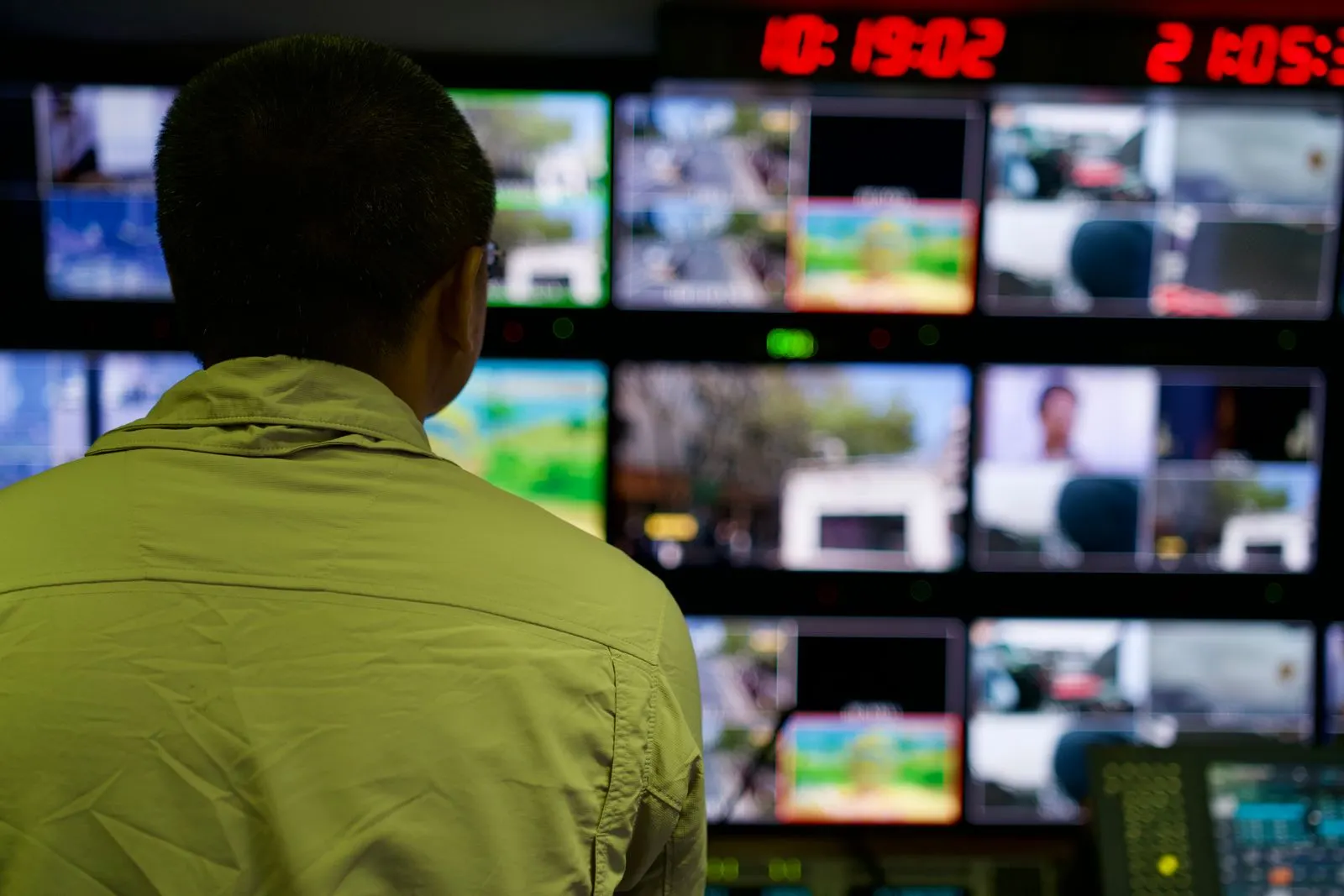
A man watching a wall of live video monitors
Every agent action visible as it happens.

Sensitive logs, controlled

Logs can contain personal and commercial data. Access is decided by Odin and redaction rules apply.

Append-only

The audit stream is designed so that records cannot be silently edited or removed.

Inside your boundary

Telemetry is stored on Argus, in your boundary, in line with your residency rules.

Retention and erasure

Retention is configurable. Erasure follows policy where the law requires it, with the effect on audit records made explicit.

10

What Cyclopes does and does not do

Does

  • Record logs, metrics, traces and decision events.
  • Trace agent prompts, retrieval, tool calls, cost and quality.
  • Tie technical signals to business objects and KPIs.
  • Provide audit views, exports, evaluation and replay.
  • Alert and route incidents into workflows.

Does not

  • Decide or block actions. Odin and Monolith do that.
  • Define business meaning. Zeus does.
  • Run agents or hold their memory. Argus and Monolith do.
  • Replace your existing monitoring unless you choose to.
  • Claim regulator acceptance of any export format today.

11FAQ

Questions

  • Zeus answers what the state of the business is and how it should work. Cyclopes answers what systems and agents actually did and whether it was any good. Zeus sends decision events to Cyclopes, and Cyclopes sends alerts back to Zeus workflows.

Experience you can lean on

Our team of consultants and experts brings a combined 35 years of industry experience.

Immersed in technology and across many different verticals, so the people on your project have done this before.

Cyclopes

Interested in Cyclopes?

Tell us the problem. An engineer, not a salesperson, answers.

  • Free 30 minute briefing
  • Embedded engineers, working on your real systems
See every decision

Interested in Cyclopes?

See, explain and improve what your organization and its agents actually do. Cyclopes is observability and logging for modern decision making, covering business and AI observability, reported in business terms.